Urofollitropin, a highly purified urinary follicle-stimulating hormone
(u-FSH) critical for ovulation induction in infertility treatment, has become a
mainstay in assisted reproductive technology (ART) protocols worldwide. As the
global urinary FSH market continues to expand—projected to grow from USD 241.58
million in 2023 to USD 335.00 million by 2029 with a CAGR of
5.60%—Urofollitropin price volatility has emerged as a key concern for
healthcare providers, fertility clinics, and patients. The cost of
urofollitropin therapy accounts for a significant portion of ART expenses,
making it essential to understand the factors influencing Urofollitropin price
and adopt effective procurement strategies to balance quality, efficacy, and
affordability. This article delves into the core drivers of price fluctuations
and offers actionable insights for optimizing clinical procurement.
Raw material supply and production technology are the primary determinants
of Urofollitropin price. Urofollitropin is derived from the urine of
postmenopausal women, a raw material whose availability is subject to
demographic changes and collection efficiency. Fluctuations in the global
postmenopausal population and regional differences in urine collection systems
can lead to supply shortages, directly driving up raw material costs.
Additionally, the traditional production process of urofollitropin involves
complex purification steps to achieve high purity, which is labor-intensive and
time-consuming, further contributing to production costs. In contrast,
recombinant FSH (r-FSH) products, though offering consistent potency, often come
with a higher price tag. Notably, clinical studies have confirmed that
highly-purified urofollitropin (HP-uFSH) achieves comparable efficacy to r-FSH
in ovulation induction while reducing treatment costs by up to 17%—a key
advantage that influences Urofollitropin price positioning in the market.
Technological advancements in purification processes, such as improved
chromatographic techniques, have helped mitigate some cost pressures by
enhancing yield and purity, but these innovations require significant upfront
investment, which is reflected in product pricing.
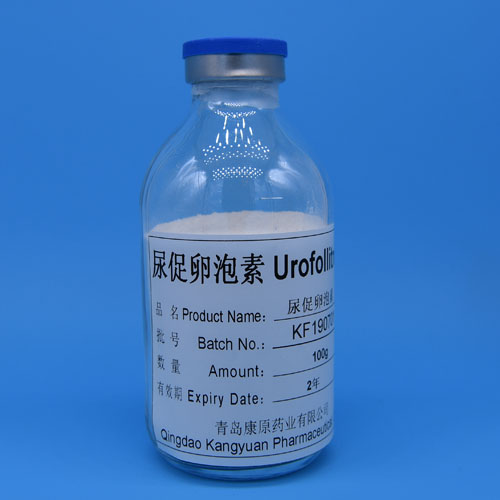
Global market dynamics and regulatory policies further shape Urofollitropin
price trends. The global urofollitropin market is characterized by intense
competition between urinary-derived and recombinant FSH products, with regional
preferences influencing price variations. In emerging markets such as Southeast
Asia and Latin America, where cost sensitivity is high, urofollitropin remains a
preferred choice due to its cost-effectiveness, driving steady demand and
relatively stable pricing. In contrast, developed markets in Europe and North
America, while valuing the consistency of r-FSH, still maintain demand for
urofollitropin in specific patient groups (e.g., clomiphene-resistant PCOS
patients), supporting a premium price segment. Regulatory policies also play a
crucial role: inclusion in national medical insurance catalogs in countries like
China and India has reduced patient out-of-pocket expenses but has also led to
price negotiations that compress manufacturer profit margins. Furthermore,
compliance with international quality standards (such as USP and EU GMP)
requires ongoing investment in quality control systems, which adds to production
costs and indirectly impacts Urofollitropin price.
For healthcare providers and fertility clinics, optimizing Urofollitropin
price management requires a strategic approach that balances cost and clinical
outcomes. First, partnering with reputable manufacturers that leverage advanced
production technologies can ensure consistent product quality while securing
competitive pricing through long-term supply agreements. Second, conducting
cost-minimization analyses tailored to specific patient populations—such as
prioritizing urofollitropin for patients with mild-to-moderate infertility where
it demonstrates cost-effectiveness—can reduce overall ART expenses. Third,
staying informed about regional regulatory changes and insurance coverage
updates helps in anticipating price fluctuations and adjusting procurement plans
accordingly. Additionally, exploring bulk procurement or group purchasing
arrangements can further lower unit costs, especially for large-volume clinics.
It is important to note that while Urofollitropin price is a key consideration,
product quality and safety must remain paramount, as substandard products can
lead to treatment failure and increased long-term costs.
As a trusted provider of reproductive health pharmaceuticals, Kangyuan is
committed to delivering high-quality urofollitropin products at competitive
prices. Our advanced purification technologies ensure product purity and
consistency, meeting global regulatory standards (USP, EU GMP), while our
optimized production and supply chain management help mitigate Urofollitropin
price fluctuations. We offer tailored procurement solutions for healthcare
providers and fertility clinics, including long-term supply agreements and
technical support to optimize treatment protocols. Whether you are seeking
reliable urofollitropin supplies, need guidance on cost-effective ART
strategies, or require assistance with regulatory compliance, our professional
team is dedicated to providing personalized support. Contact Kangyuan today to
learn more about our urofollitropin products and how we can help you navigate
Urofollitropin price dynamics while ensuring optimal patient outcomes.